How to repurpose one blog post into a month of content

Many small business owners feel pressure to constantly create new content, especially for social media. I know from experience that content creation and coming up with new ideas can quickly become exhausting.
Not only that, but social media moves fast, and most small businesses don’t have huge marketing teams or endless time to keep up.
So what if, instead of burning yourself out trying to stick to an ambitious content calendar, you started thinking more strategically about the content you create?
In the AI era, people are discovering businesses in many different ways - through AI search tools, YouTube, Reddit, social media, and traditional search engines.
Long-form content like blogs, helpful resources, and thoughtful answers are becoming more valuable. They can support long-term visibility, build credibility, and help people discover your business long after you hit publish.
Learning how to turn one blog post into a month of content can help you create a more sustainable marketing strategy, one that saves time, supports visibility across multiple platforms, and helps you get more value from the content you already create.
So instead of constantly creating more content, focus on making your content work harder for you.
Why repurposing content matters in 2026
“In 2026, creating more content isn’t necessarily the goal. Creating more strategic content is.”
In 2026, repurposing content is more important than ever. This is because people are no longer discovering businesses in just one place - they may find you through Google, AI search tools, social media, YouTube, Pinterest, email newsletters, or online communities.
Instead of creating completely different content for every platform, repurposing allows you to turn one thoughtful piece of content into multiple touchpoints across your marketing channels.
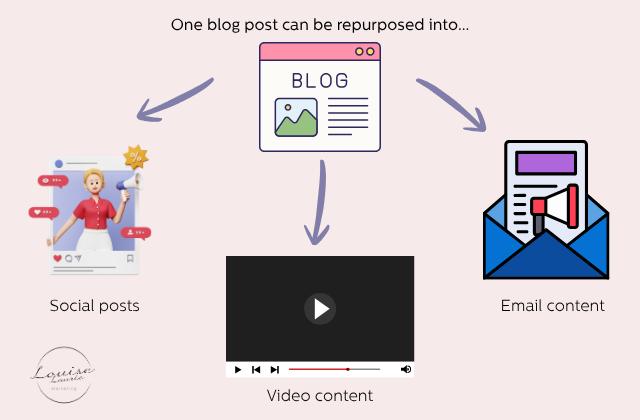
A blog post isn’t just a blog post anymore, it can become the foundation of your wider content strategy. One piece of content can work in lots of different ways over a much longer period of time. For example, once you’ve written a blog post, you can repurpose it into a newsletter, social media posts, Pinterest content, or even a podcast or YouTube video, helping to drive visits back to your website and boost visibility across multiple channels.
Not only can this save time and reduce content burnout, but it can also help create a more consistent brand message and improve discoverability. For example, while social media posts often disappear quickly, blog content can continue supporting search visibility, AI discoverability, credibility, and trust long after it’s published.
Repurposing content can also support SEO and AI discoverability by helping you build topical authority and reinforce key themes across your content ecosystem. It also allows you to increase reach by creating multiple opportunities for people to discover your business across different channels. Research shows repurposing content can more than double your reach on social media.
Most importantly, it helps you get more value from the time and energy you are already investing into creating content. For small businesses with limited time and resources, this kind of sustainable content strategy can make a huge difference.
Start with one strong blog post
The best place to start is with a strong blog post or piece of content. The strongest blog posts align with your business goals and answer real questions that your target audience is already asking. These become your ‘core’ or evergreen content pieces that, if done well, will continue to bring you traffic long after they are published. Think of in-depth content like:
how-to guides
FAQs
opinion pieces
educational posts
storytelling posts
beginner guides/tutorials
whitepapers and reports
The best blog posts are genuinely helpful, offer your unique perspective, and provide value to your audience while supporting your wider business goals. Often, the strongest evergreen blog posts are longer, more in-depth pieces of educational content.
These are the types of posts you should aim to repurpose. If you already have existing blog posts/content like this that you could repurpose - great! Check your analytics to see which of your posts bring you the most traffic and engagement, these would be a great place to start.
In terms of goals, my blog posts generally help to support my Skillshare marketing course content, grow my email list, and bring awareness and targeted traffic to my site, supporting my marketing freelance business. So, my blog content is not random, it is strategic.
I will often adapt content from my Skillshare courses to create blog content and social media content around related or student questions. This way I am getting further value out of the in-depth course content I have already created, meaning the blog content supports the course and the course supports the blog content, and both of these then support my social media content. With limited time as a small business owner, this strategic content strategy is working for me so far!
In the next section I will show you how blog content can be repurposed, as well as examples from my own marketing.
Ways to repurpose one blog post
“A blog post isn’t just a blog post anymore, it can become the foundation of your wider content strategy”
Social media posts
One of the most obvious places to start with blog repurposing is social media. Pull out any key points, stats, quotes, tips from your blog post and turn this into several social media graphics which could be shared over several weeks. You could also create an Instagram or LinkedIn carousel linking back to your blog post to drive further traffic to your site. For LinkedIn specifically you could share snippets of the blog over several posts, offering your thoughts or reflections.
For example, the post below shows an Instagram carousel I created that was repurposed from this very blog post!
Short-form videos
Similarly you can turn your blog post into multiple short-form videos which can be used across TikTok, Instagram Reels and YouTube shorts. Again you can save time here by uploading the same videos across platforms. This will help you reach a wider audience, as some people will prefer to watch a video rather than read a long blog post. Video content also continues to be one of the most engaging and discoverable content formats across social media.
Here you can repurpose one part of your blog post, maybe the main takeaways or your thoughts on the topic. Remember, short-form video should be just that - short! So try and keep between 30-60 seconds and include a strong hook to grab attention. AI tools like ChatGPT can help here, for example you could share your full blog post and ask AI to turn it into a script for a 30 second short-form video, or to give you ideas on impactful talking points.
Below is a short form video I shared on both Instagram Reels and YouTube shorts to support my Generative Engine Optimisation blog post and SEO Skillshare course.
Long-form videos
Blog content can also be used as a basis for long-form video content, such as YouTube videos or educational courses. Long-form video helps to get your content discovered by more people, as well as building trust with your audience. Think of it like this: a blog post gives you searchable written content. A YouTube video gives you searchable video content. So you’re multiplying the ways people can discover your ideas, as some people prefer to watch videos.
YouTube is also a search engine and unlike some other social posts, YouTube videos can build long-term discoverability, and drive traffic and engagement for months or even years after they are posted. Well-optimised videos that complement a blog post (especially if they are embedded into the relevant post) can also help to support SEO and AI discovery by appearing in search results and AI generated answers.
In my case, I tend to do this the other way around, and my long-form Skillshare video content forms the basis for educational blog content - like this one! I am planning on creating educational marketing videos on YouTube though going forwards, so if that’s of interest to you, subscribe to my channel so you don’t miss out.
Pinterest pins
Pinterest is underrated but it can be very effective for driving ongoing blog traffic. Like YouTube, Pinterest is a search engine where users are actively searching for ideas, advice and inspiration, so pins can drive traffic for months or even years. Well-optimised pins can even rank in Google images too.
The best part is that you don’t need to create unique content for Pinterest. You can turn one blog post into several pins without that much extra work. To help with this, you can use AI tools like ChatGPT to help generate unique and optimised titles for your pins and then use Canva to create your pin graphics.
As an example, below is a pin I created for my blog post 5 marketing trends for small businesses. If I wanted to, I could create several variations of this pin, or pull out quotes, ideas or stats from the post to create separate pins and boost visibility.

You could also create infographics from a blog posts, especially ones that contain lots of stats that would look good visually. These can then be shared on Pinterest and across wider social media like LinkedIn, helping to boost engagement. Below is an infographic I created and shared on Pinterest, inspired by my blog post on custom ChatGPTs for small businesses.

Email newsletter
Blog content can be shared in your weekly or monthly newsletters with links back to the post to drive traffic and engagement. You can use your newsletter to share key takeaways or talk around the topic more for example. This gives you something to talk about and helps to keep your email marketing consistent, building trust and engagement with your audience.
Instead of treating your blog, email marketing, and social media as completely separate activities, repurposing helps create a more connected and sustainable content strategy.
Lead magnet /digital product
You can repurpose or expand on your blog content (or a series of blog posts) to create more in-depth resources such as eBooks, digital products, webinars, workshops, or online courses. These can either become additional income streams or be used as lead magnets to help grow your email list.
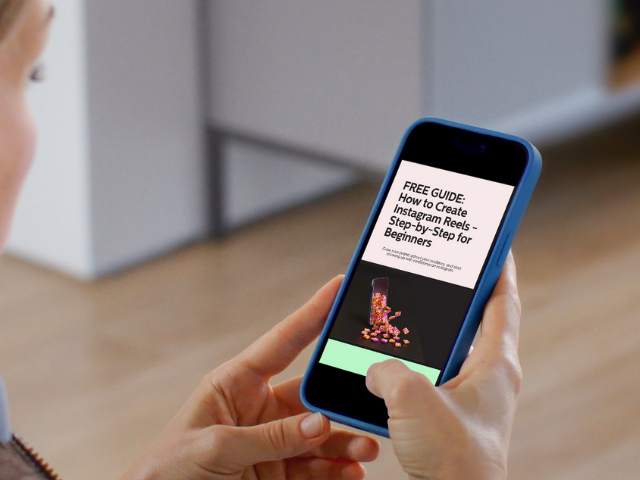
If somebody has searched for a question and discovered your blog post, there’s already clear interest in that topic. Creating more detailed content around it gives you the opportunity to provide even more value, build trust with your audience, and guide them further into your content ecosystem. For example, my free Instagram Reels guide shown below.
Podcasts / audio content
Blog content can also form the basis for a podcast episode or script, helping you reach audiences that prefer listening to content rather than reading it. A single blog post can be expanded into a longer discussion, broken down into shorter episodes, or used as talking points for a more conversational format - allowing you to get even more value from the content you have already created.
Tips for repurposing blog content
Quality over quantity - Focus on creating thoughtful, useful blog post rather than trying to create more content for the sake of it.
Choose platforms that align with your audience - When it comes to repurposing blog content, focus on the platforms where your audience actually spends time and how they prefer to consume content, whether that’s Instagram, LinkedIn, Pinterest, YouTube, podcasts, or email newsletters. You don’t need to do it all and be on every platform.
Use AI tools as support - AI tools can help you brainstorm content ideas, pull out key points, create social captions, summarise blog posts, or generate content variations. However, your own expertise, opinions, and human perspective are still what make the content valuable.
Adapt content for each platform - Avoid simply copying and pasting the exact same content everywhere. Instead, tailor the format and messaging for the platform you are using. A blog post might become a carousel on Instagram, a thought leadership post on LinkedIn, or a more conversational email newsletter.
Focus on evergreen topics where possible - Repurposing and refreshing blog content that focuses on evergreen topics and common customer questions can help your content stay relevant and discoverable for much longer. You don’t have to repurpose every blog post!
Track what performs well - Pay attention to which blog posts generate the most traffic, engagement, saves, shares, or enquiries. These are often the best pieces of content to repurpose further or expand into more in-depth resources.
FAQs about repurposing blog Content
What is content repurposing?
Content repurposing means taking one piece of content and adapting it into multiple formats for different platforms. For example, a blog post could become social media posts, videos, Pinterest pins, email newsletters, podcast content, or even a digital product.
Why is repurposing content important?
Repurposing content helps small businesses save time, reduce content burnout, and get more value from the content they already create. It also helps to increase reach and engagement, creating a more consistent marketing strategy across different channels.
Can repurposing content help SEO?
Yes. Repurposing content can support SEO and AI discoverability by helping you build topical authority, reinforce key themes across your content ecosystem, and create multiple opportunities for people to discover your business online.
What types of blog posts work best for repurposing?
Evergreen blog posts usually work best for repurposing, rather than time senstitive posts (like product launches). This includes how-to guides, FAQs, educational posts, beginner tutorials, opinion pieces, and content that answers common customer questions. Use your website analytics to find out which existing content performs the best with your audience - high perfoming posts are ideal for repurposing across channels.
Can AI tools help with content repurposing?
AI tools can help speed up the repurposing process by summarising blog posts, generating content ideas, creating captions, suggesting video hooks, or adapting content for different platforms. However, your own expertise, personality, and perspective are still what make the content valuable.
Do I need to be on every platform to repurpose content?
No. It’s more effective to focus on the platforms that align with your audience and goals. Repurposing content should help simplify your marketing strategy, not make it feel more overwhelming.
Build a smarter blogging strategy
This shift towards more strategic, long-form, repurposable content is exactly why I created my latest Skillshare class:
Blogging Isn’t Dead: A Smart Blogging Strategy for Small Businesses in 2026
Inside the class, I cover:
-what to blog about
-how blogging supports visibility in 2026
-AI search shifts
-and how to create content that keeps working long after you hit publish
If you’re feeling overwhelmed by content creation or struggling to keep up with constantly posting on social media, this class will help you build a calmer, more sustainable content strategy that keeps working long after you hit publish. 🙂
You can find the class here.
And remember, sometimes the most effective content strategy isn’t creating more content - it’s getting more value from the content you already have.
Happy blogging!
– Louise
P.S. Don’t forget to:
📩 Grab your free GEO guide
💌 Sign up for my newsletter for regular marketing tips
📸 Follow me on Instagram for updates + inspo